
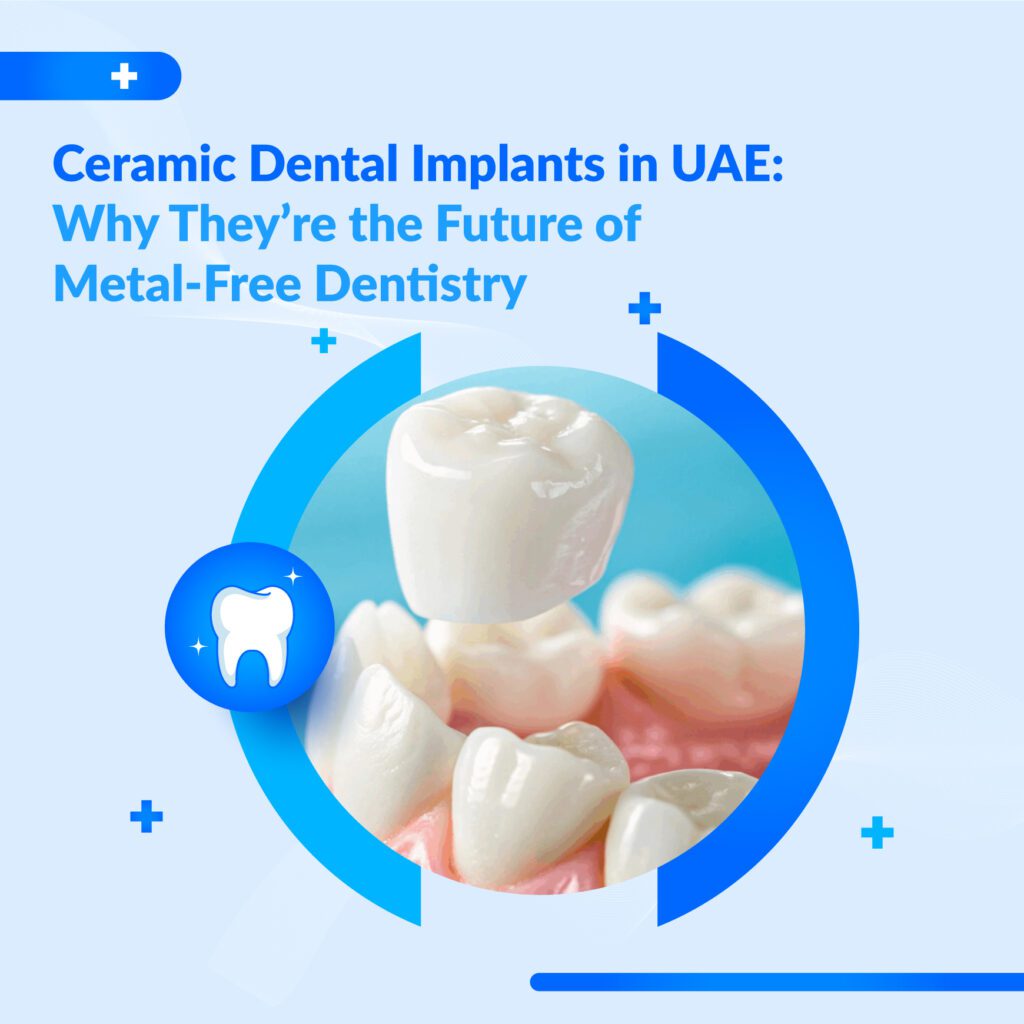
Many people in the UAE face the same dilemma: a missing tooth or unsatisfactory implant that just doesn’t feel or look quite right. You might be worried about how your smile appears, or uneasy about having metal in your jaw. Thankfully, a newer option is gaining traction across Dubai and the UAE: ceramic dental implants. These metal-free implants are fast becoming the preferred choice for patients who seek natural aesthetics, biocompatibility and long-term comfort.
What Are Ceramic Dental Implants Made Of?
Ceramic implants, often made from a high-strength material called zirconia, offer a truly metal-free alternative to the traditional titanium implant. Unlike metal implants, they contain no visible grey core and no metallic component-to-gum junction. The simplicity of the material means fewer concerns about corrosion or visible metal margins. Because Dr Sabharwal’s practice focuses on advanced implant and maxillofacial treatments, these options are increasingly offered in Dubai’s premium clinics.
Why Many Patients in the UAE Are Opting for Metal-Free Dental Implants
Many people today are specifically looking for metal-free dental implants UAE because they want a solution that avoids titanium while still offering strength and reliability.
- A strong preference for natural-looking smiles, especially front teeth where appearance matters.
- Concerns about metal sensitivity or allergy (even if rare) mean patients seek metal-free alternatives.
- Thin gum tissue is common, and a grey rim from a metal implant can show through which is something ceramic avoids entirely.
- The idea of incorporating a material that is more “natural” and blends seamlessly with a healthy gum profile is reassuring for many patients.
This is why more residents prefer ceramic dental implants UAE as a long-term replacement that feels natural and looks like real teeth.
Biocompatible Benefits of Ceramic Implants
When we talk about biocompatible dental implants, we mean implants that blend well with your body’s tissues. Ceramic implants offer:
- Excellent integration with bone and gums (osseointegration)
- Lower affinity for bacterial plaque on the surface compared to some metals
- Strong resistance to corrosion, discoloration or metal ions migrating over time
In short, the gum tissue surrounding a ceramic implant often has a healthier appearance, and the implant can sit “under the radar” of both the eye and the body.
Aesthetic Advantages: Designed to Look Like Real Teeth
One of the most compelling reasons to choose ceramic is aesthetic. For highly visible areas like front teeth, many patients in Dubai choose aesthetic dental implants Dubai because the natural white ceramic blends beautifully with the gums and surrounding teeth. Because the implant itself has a white-to-tooth-colour appearance, the underlying structure won’t cast a dark shadow through thin gums. In a city like Dubai, where smiles matter and photographic moments abound, ceramic implants truly deliver a “look natural” result.
Compared to a metal implant that may compromise a front-tooth appearance, ceramic implants are ideal when:
- The tooth is in a visible zone
- The gum is thin or receding
- You simply prefer a “no metal” solution for your body
Ceramic vs Titanium Implants: Key Differences Explained
To help you understand the distinction, here’s a simple comparison:
Strength & stability
Modern zirconia implants are engineered for durability, with studies showing success rates nearly comparable to titanium.
Gum appearance
Titanium: grey core may show if gum recedes.
Ceramic: tooth-coloured core, invisibility under normal gum levels.
Material behaviour
Titanium: metal that may conduct temperature changes or be slightly more perceptible.
Ceramic: non-metallic, neutral thermal behavior, less likely to create sensitivity to hot/cold.
How Ceramic Dental Implants Work in Practice
Here’s a simplified breakdown of what you can expect when choosing ceramic implants:
- Initial consultation & imaging – The specialist (such as Dr. Gagan Sabharwal) will assess your bone, gum and smile zone.
- Implant placement – The ceramic implant is surgically inserted into the jawbone.
- Healing & osseointegration – Over a few months the implant bonds with bone, just like a titanium implant, but often with excellent tissue response.
- Crown attachment – A customised ceramic or zirconia crown is secured, giving the final natural look and function.
While individual healing times vary, the process is well established and state-of-the-art in Dubai’s implant practices.
Who May Benefit Most from Ceramic Implants?
If you recognise any of these, ceramic implants could be a particularly smart fit:
- You want a smile that looks fully natural without metal exposure
- You have thin or receding gums and worry about visible metal
- You prefer a metal-free option inside your body
- The visible front-tooth zone is what concerns you most
- You’re seeking a long-term solution with excellent aesthetic and tissue health
Common Concerns and Misconceptions
“Ceramic implants must be weaker.” Not true. Modern zirconia implants are designed for strength and stability.
“They’re untested.” Actually, ceramic implantology has matured and many advanced clinics in the UAE now offer these systems.
“They stain easily.” Zirconia has a smooth surface that resists staining and builds less plaque compared to less advanced materials.
Why Choosing a Specialist Matters
Implant results depend heavily on planning, precision and after-care. A specialist like Dr Sabharwal, who holds high-level training in implantology and oral & maxillofacial surgery, has the expertise to place implants with the right angle, gum management and aesthetic outcome. Ceramic implants demand the same rigorous planning as any implant and benefit from a clinic experienced in advanced digital imaging and guided placement.
Final Thoughts: The Future of Metal-Free Dentistry
In the UAE, where appearance, comfort and longevity matter, ceramic dental implants are emerging as the future of metal-free dentistry. They deliver the trifecta of excellent aesthetics, gum-friendly biocompatibility and high durability. If you are looking for a premium, natural-looking solution to missing teeth, especially in visible areas, this is a modern option worth exploring. To understand whether ceramic implants are the right option for you, schedule a consultation with Dr. Gagan Sabharwal.
FAQ: Ceramic Dental Implants in UAE
1. What makes ceramic dental implants in the UAE different from traditional titanium implants?
Ceramic dental implants in the UAE are made from zirconia, a metal-free, biocompatible material that blends naturally with gum tissue. Unlike titanium, ceramic implants do not show a grey core, making them ideal for aesthetic zones. They are corrosion-resistant, gum-friendly, and offer excellent long-term stability comparable to titanium.
2. Are metal-free dental implants in the UAE strong and durable enough?
Yes. Modern metal-free dental implants in the UAE, especially zirconia implants, are engineered for high strength and long-term function. Clinical studies show that their success rates closely match titanium implants, while offering added advantages like reduced plaque buildup and better soft-tissue health.
3. Who is the best candidate for biocompatible dental implants?
Biocompatible dental implants are ideal for patients who prefer a metal-free solution, have thin or receding gums, want a natural-looking smile, or are concerned about metal sensitivity. Ceramic implants integrate well with bone and gums, making them suitable for front-tooth replacements where aesthetics matter most.
4. Why are aesthetic dental implants in Dubai becoming more popular?
Aesthetic dental implants in Dubai are rising in demand because ceramic implants deliver a natural, white-tooth colour that avoids dark shadows under the gums. They blend seamlessly with surrounding teeth, making them the preferred choice for smile-focused patients seeking a premium, photogenic result.

