
Do you have ongoing jaw pain, a painful wisdom tooth, or a swelling that just won’t go away? You may ponder whether a general dentist is enough.
While general dentists treat many common dental problems, some conditions require the advanced skills of an Oral Surgery Specialist. These specialists receive years of additional surgical training to diagnose and treat complex conditions involving the mouth, jaw, face, and surrounding tissues.
Knowing when to see an Oral Surgeon UAE can save you time, lessen discomfort, and prevent complications. Delaying specialist treatment may allow a small problem to become much more serious.
At Dr. Gagan Sabharwal’s clinic, patients receive Expert Oral Surgery Services UAE using advanced diagnostics, modern surgical techniques, and personalised treatment plans. Whether you need wisdom tooth removal, dental implants, jaw surgery, or treatment for facial conditions, expert care can make a significant difference.
In this blog, you’ll discover:
- The difference between a dentist and an oral surgeon
- Ten warning signs you should never ignore
- When an Oral Surgery Consultation Dubai is recommended
- How specialist treatment improves outcomes
Recognising these signs early helps you receive the right treatment at the right time.
What Does an Oral Surgeon Do?
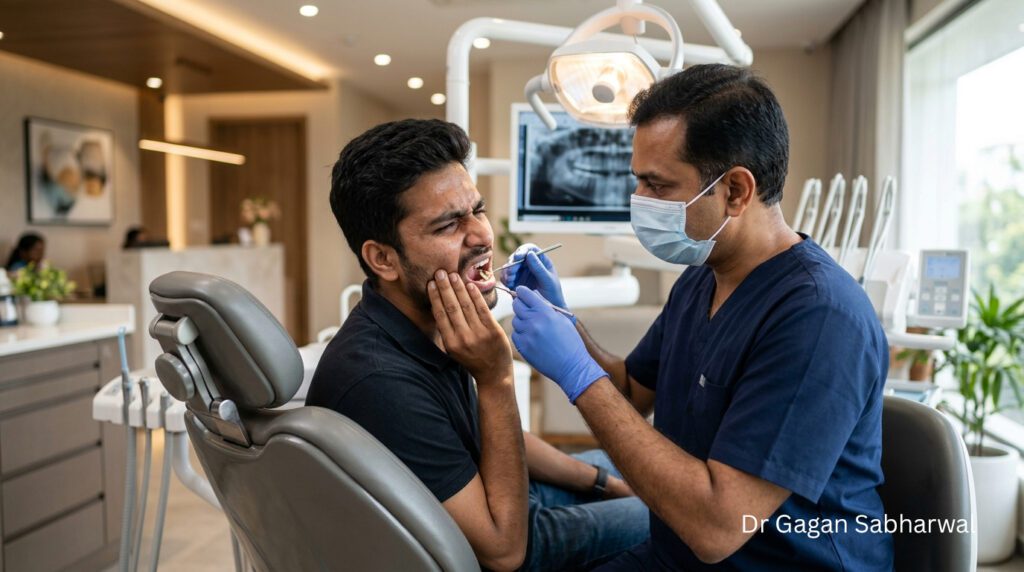
An oral and maxillofacial surgeon treats conditions that need advanced surgical expertise.
These specialists manage problems involving:
- Teeth
- Jawbones
- Facial bones
- Oral soft tissues
- Salivary glands
Many complex dental conditions require surgical treatment rather than routine dental care.
Why Seeing the Right Specialist Matters
Choosing the correct specialist upgrades diagnosis and treatment.
Benefits include:
- Earlier diagnosis
- Better surgical planning
- Faster recovery
- Reduced complications
- Long-term success
Expert care often prevents small problems from becoming major ones.
10 Warning Signs You Should Visit an Oral Surgeon
1. Impacted Wisdom Teeth
Wisdom teeth often become trapped beneath the gums.
Common symptoms comprise of:
- Pain
- Swelling
- Infection
- Difficulty opening the mouth
These cases frequently require surgical removal.
2. Persistent Jaw Pain
Jaw pain lasting several weeks is not typical.
It may indicate:
- TMJ disorders
- Joint inflammation
- Bite problems
An Oral Surgery Specialist can identify the cause.
3. AbsentTeeth Requiring Dental Implants
Dental implants involve surgical placement into the jawbone.
This requires advanced planning and precision.
4. Facial Swelling
Unexplained facial swelling should never be disregarded.
Possible causes include:
- Infection
- Cysts
- Jaw lesions
- Salivary gland disorders
Prompt evaluation is essential.
5. Difficulty Opening or Closing Your Mouth
Limited jaw movement may indicate a TMJ disorder or joint injury.
Early treatment often prevents aggravating symptoms.
6. Persistent Oral Lumps or Lesions
Any growth that remains for more than two weeks deserves professional evaluation.
Early diagnosis ameliorates treatment outcomes.
7. Facial Trauma
Sports injuries, falls, and accidents can harm facial bones and jaws.
A specialist ensures proper healing and function.
8. Severe Tooth Infections
Some infections spread into surrounding bone and facial tissues.
These situations may need surgical treatment.
9. Jaw Misalignment
Difficulty biting, chewing, or speaking normally may indicate jaw alignment problems.
Corrective jaw surgery may be recommended.
10. Bone Loss Before Dental Implants
Patients with insufficient jawbone often require bone grafting before implants.
This generates a stable foundation for successful treatment.
What Happens During an Oral Surgery Consultation Dubai?
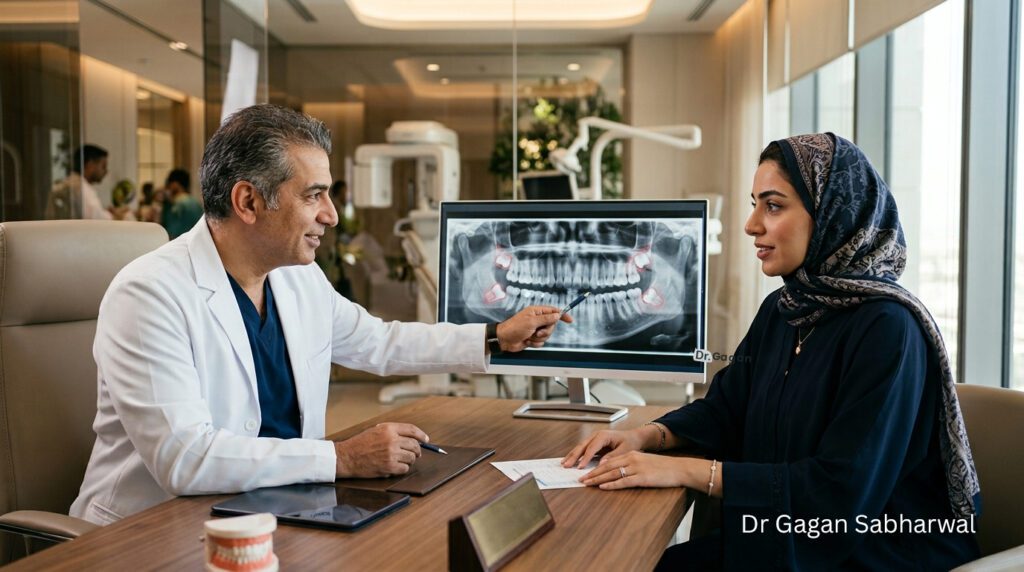
Many patients worry about their first specialist appointment.
The process is simple and straightforward.
Step 1: Medical History
Your symptoms and overall health are reviewed.
Step 2: Clinical Examination
The surgeon examines the affected area carefully.
Step 3: Digital Imaging
Advanced scans provide detailed information about the problem.
Step 4: Diagnosis
The cause of your symptoms is explained clearly.
Step 5: Personalised Treatment Plan
Treatment recommendations are based on your individual needs.
Patient Success Story
A patient in Dubai experienced recurring jaw pain and facial swelling for several months.
Multiple treatments provided only temporary relief.
Following an Oral Surgery Consultation Dubai, Dr. Gagan Sabharwal diagnosed an impacted wisdom tooth with a deep infection.
The tooth was withdrawn successfully.
Pain, swelling, and discomfort resolved completely during recovery.
Interesting Fact
Oral and maxillofacial surgeons complete several additional years of hospital-based surgical training beyond dental school.
This advanced education develops them to manage complex facial and jaw conditions safely.
Why Opt for Dr. Gagan Sabharwal?
Dr. Gagan Sabharwal is an experienced oral and maxillofacial surgeon serving patients across Dubai and the UAE.
Patients choose his clinic because of:
- Advanced surgical expertise
- Modern digital diagnostics
- Personalised treatment plans
- Comprehensive patient care
- Minimally invasive surgical techniques
His main goal is to provide safe, predictable, and long-lasting results.
Conclusion
Not every dental problem requires an oral surgeon, but many important conditions do.
Persistent pain, facial swelling, impacted teeth, jaw disorders, and oral lesions should never be ignored or postponed.
Seeking Expert Oral Surgery Services UAE at the right time improves diagnosis, treatment, and recovery.
If you’re experiencing any of these warning signs, an Oral Surgery Consultation Dubai can provide answers and a personalised treatment plan.
Book a consultation with Dr. Gagan Sabharwal today and receive expert care from a trusted Oral Surgeon UAE dedicated to protecting your oral health and restoring your confidence.

