
Introduction
Do you wake up with a tight jaw, aching cheeks, or headaches that make your mornings uncomfortable?
You may be clenching your teeth without even realising it.
Jaw muscle tension and temporomandibular disorders can make everyday activities like chewing, speaking, and yawning uncomfortable.
For some patients, traditional treatments provide limited relief, leading them to explore botox for tmj in dubai.
Botox is widely associated with cosmetic treatments. However, botulinum toxin also has medical applications involving muscle activity.
When injected into selected jaw muscles, it temporarily reduces their ability to contract strongly.
This makes botox for tmj an option sometimes considered for persistent muscle-related jaw pain.
However, Botox does not treat every cause of TMJ discomfort, and scientific evidence remains mixed.
Some patients may experience temporary relief, while others receive little benefit.
Understanding the difference between muscle-related pain and problems inside the jaw joint is therefore essential.
This guide explains how Botox works, how long its effects last, who may benefit, possible side effects, and available alternatives.
What Is TMJ and Why Does It Cause Pain?
The temporomandibular joints connect your lower jaw to your skull.
They allow you to:
- Open and close your mouth
- Chew food
- Speak
- Yawn
- Move your jaw sideways
Temporomandibular disorders, commonly called TMDs, affect the jaw joints, chewing muscles, or surrounding structures.
Common symptoms include:
- Jaw pain
- Muscle tenderness
- Painful clicking
- Restricted mouth opening
- Jaw locking
- Headaches associated with jaw muscle tension
Not every TMJ problem has the same cause.
That distinction matters when choosing treatment.
How Does Botox for TMJ Work?
Botox is a brand name for a form of botulinum toxin type A.
It temporarily reduces communication between nerves and the muscles receiving treatment.
This weakens selected muscle contractions.
When used for jaw muscle problems, injections may target muscles involved in chewing and clenching.
The aim is to reduce excessive muscle activity and potentially relieve associated discomfort.
However, Botox does not repair damaged joint structures or correct every underlying cause of jaw pain.
What Is Masseter Botox for Jaw Pain?
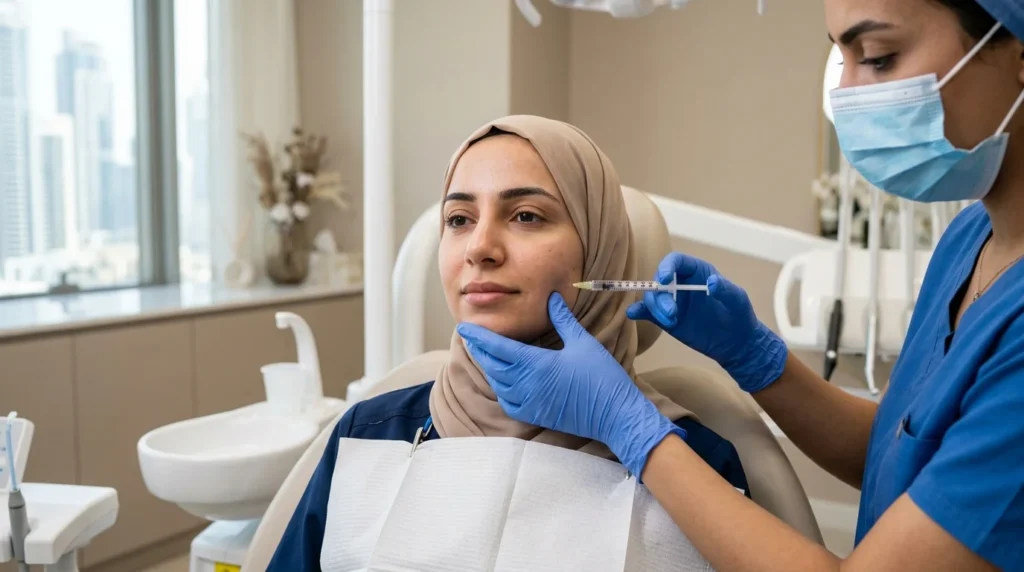
The masseter is a powerful chewing muscle located along the sides of your jaw.
You can feel it tighten when you gently clench your teeth.
Some patients experience persistent tenderness or excessive activity in this muscle.
Masseter botox for jaw pain aims to reduce the strength of selected muscle contractions.
Potential benefits in carefully selected patients may include:
- Reduced muscle tension
- Less discomfort associated with clenching
- Temporary reduction in excessive muscle activity
- Improved comfort during certain jaw movements
Results vary, and relief is not guaranteed.
Does Botox Actually Work for TMJ Disorders?
The answer depends on the type of TMJ disorder.
Research produces mixed findings.
Some clinical studies suggest botulinum toxin may reduce muscle-related jaw pain.
However, other studies find no clear advantage over placebo or conventional treatments.
A 2024 umbrella review examining 18 systematic reviews identifies possible pain relief in muscle-related TMD.
It also finds Botox is not superior to standard treatments and raises concerns about adverse effects.
Therefore, Botox is generally not recommended as the first treatment for TMJ disorders.
It may be considered in selected patients with persistent muscle-related symptoms after conservative treatment proves insufficient.
How Long Does Botox for TMJ Last?
Botox does not provide permanent muscle relaxation.
Its effects gradually reduce as nerve and muscle activity recover.
Research examining botulinum toxin for muscle-related TMD reports effects lasting approximately 8–24 weeks in some patients.
That represents roughly two to six months.
However, the duration of symptom relief varies.
Several factors influence the response:
- Muscle activity
- Individual anatomy
- Treatment approach
- Underlying diagnosis
- Previous treatments
- Individual response
Repeat injections are not automatically necessary or appropriate.
Your specialist should reassess the benefits and risks before considering further treatment.
Who May Be Considered for Botox Treatment?
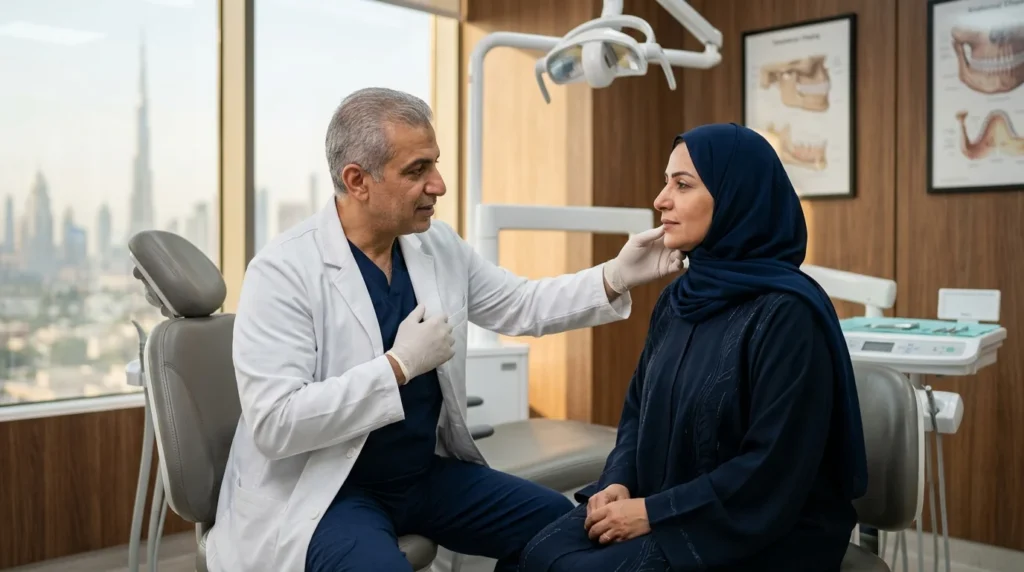
Botox may be discussed for selected patients experiencing persistent muscle-related jaw pain.
Possible situations include:
1. Persistent Chewing Muscle Pain
Some patients experience ongoing tenderness around the masseter or other chewing muscles.
2. Significant Muscle-Related Clenching Symptoms
Excessive clenching can contribute to jaw muscle discomfort.
Botox may reduce muscle contraction strength, although it does not necessarily stop the underlying clenching behaviour.
3. Limited Relief From Conservative Care
Patients who continue experiencing symptoms despite appropriate first-line treatment may discuss additional options.
4. Carefully Diagnosed Muscle-Related TMD
Botox is more relevant to selected muscular problems than structural abnormalities inside the jaw joint.
A specialist assessment helps establish this distinction.
Who May Not Be Suitable for Botox?
Botox is not appropriate for everyone.
Additional caution or avoidance may apply to patients with:
- Certain neuromuscular conditions
- Known sensitivity to botulinum toxin products
- Infection at the intended injection site
- Pregnancy or breastfeeding, where treatment is generally avoided because safety data are limited
- Certain medication interactions
- Jaw pain primarily caused by structural joint disease
Your clinician should review your medical history before discussing injections.
What Happens During a TMJ Botox Consultation?
Treatment begins with diagnosis, not injections.
Step 1: Symptom Assessment
Your specialist asks about pain, clenching, jaw movement, and previous treatments.
Step 2: Jaw Examination
The examination may assess:
- Muscle tenderness
- Mouth opening
- Joint sounds
- Jaw movement
- Bite-related concerns
- Signs of teeth grinding
Step 3: Identify the Pain Source
Your specialist considers whether symptoms arise mainly from muscles, joints, teeth, or another condition.
Step 4: Discuss Treatment Options
Conservative approaches usually receive consideration before injections.
Step 5: Consider Injections When Appropriate
If Botox is clinically appropriate, the clinician explains the expected benefits, limitations, risks, and follow-up plan.
Are TMJ Injections Painful?
TMJ injections is a broad term covering several different treatments.
Botulinum toxin injections into chewing muscles differ from injections directly into the jaw joint.
Botox treatment usually involves small injections into selected muscles.
Patients may experience brief discomfort at the injection sites.
Temporary tenderness or bruising can also occur.
The exact experience depends on the treatment and individual sensitivity.
What Are the Possible Side Effects?
Botox is not risk-free.
Potential adverse effects include:
- Injection-site pain
- Bruising
- Temporary chewing weakness
- Changes in smile symmetry
- Unwanted muscle weakness
- Facial appearance changes
Repeated treatment may also raise concerns about muscle changes and possible effects on surrounding bone.
Rare but serious toxin-related effects can include swallowing or breathing difficulties.
Seek urgent medical attention if these symptoms develop after treatment.
Botox vs Other Non-Surgical TMJ Treatments
Patients exploring non-surgical tmj treatment dubai should understand the alternatives.
Jaw Exercises and Physiotherapy
These can help improve jaw movement and manage selected muscle problems.
Heat or Cold Therapy
Simple temperature-based measures may temporarily relieve discomfort.
Self-Management
Avoiding excessive gum chewing, reducing jaw overuse, and managing clenching habits can help.
Medication
Appropriate short-term medication may help manage pain or inflammation.
Oral Appliances
Certain patients benefit from professionally assessed oral appliances.
The correct approach depends on the diagnosis.
What About Teeth Clenching Treatment in Dubai?
Patients searching for teeth clenching treatment in dubai often assume Botox is the only solution.
However, clenching can involve several contributing factors.
These may include:
- Awake clenching habits
- Sleep-related bruxism
- Stress-related muscle tension
- Certain medications
- Sleep-related conditions
Treatment depends on identifying the underlying problem.
A protective dental appliance may help protect teeth in selected cases.
Behavioural approaches can help patients recognise and reduce daytime clenching.
Botox may reduce muscle strength temporarily, but it does not automatically eliminate bruxism.
A Simple Patient Example
Consider a Dubai professional experiencing persistent jaw muscle pain.
The patient notices frequent daytime clenching and tenderness around the cheeks.
A specialist examination identifies significant muscle-related discomfort without clear evidence of structural joint disease.
Initial management focuses on exercises, habit awareness, and other conservative measures.
If symptoms remain troublesome, the clinician may discuss additional treatments, including the possible role of Botox.
Now consider another patient with repeated jaw locking caused by an internal joint problem.
Botox may not address the underlying cause.
These examples show why diagnosis matters more than choosing a treatment based on symptoms alone.
Why Consult Dr. Gagan Sabharwal for TMJ Problems?
Dr. Gagan Sabharwal is an Oral and Maxillofacial Surgeon with more than 20 years of experience.
His training includes advanced education in temporomandibular joint procedures, including TMJ arthroscopy.
His Dubai practice focuses on oral, jaw, and facial conditions, including temporomandibular joint disorders.
TMJ symptoms can arise from muscle problems, joint abnormalities, or several overlapping causes.
Specialist evaluation helps determine the underlying diagnosis and appropriate treatment options.
Patients considering Botox or other TMJ interventions benefit from understanding whether their symptoms are suitable for conservative management or require additional investigation.
Conclusion
Botox for tmj in dubai attracts attention because it offers a non-surgical way to reduce selected jaw muscle contractions.
However, it is not a universal solution for jaw pain, clicking, locking, or teeth grinding.
Some patients with persistent muscle-related discomfort may experience temporary relief.
Others may benefit more from physiotherapy, self-management, oral appliances, or treatment directed at the underlying joint condition.
Research remains mixed, and Botox is generally not a first-line treatment for TMD.
Its effects are temporary, and possible side effects require careful consideration.
If you experience persistent jaw pain, clenching, or restricted movement, begin with an accurate diagnosis.
Book a consultation with Dr. Gagan Sabharwal in Dubai to understand your TMJ condition and explore suitable treatment options.
The right treatment starts with identifying the cause, not simply choosing an injection.

