
Getting dental implants is only the beginning. What you do every day can influence how well they perform over time.
Dental implants cannot develop cavities like natural teeth.
However, the gums and bone surrounding an implant can still develop inflammation and disease.
That makes Dental Implant Maintenance a crucial part of protecting your new teeth.
The encouraging news is that implant care does not need to be complicated.
Brushing properly, cleaning between teeth, protecting your gums, and attending professional reviews can make a meaningful difference.
Research on modern implants shows excellent long-term survival. Studies estimate that around 96% of implants remain in place after ten years.
However, these figures do not guarantee the same result for every patient.
Your oral hygiene, gum health, smoking habits, medical conditions, bite forces, and professional maintenance all influence the outcome.
For patients with Dental Implants UAE, developing a simple daily routine helps safeguard both the implant and surrounding tissues.
Here are nine practical habits that support Long-Term Dental Implants.
Why Is Dental Implant Maintenance Important?
An implant usually has three important parts:
- Implant inside the jawbone
- Abutment connecting the components
- Crown or restoration above the gum
The implant itself cannot decay.
However, plaque and bacteria can still collect around the gum line.
If plaque remains, the surrounding tissue can become inflamed.
Early inflammation around implants is called peri-implant mucositis.
More advanced disease can affect the supporting bone around the implant.
Daily cleaning therefore protects much more than your smile.
Nine Daily Care Tips for Dental Implants
1. Brush Twice Every Day
Start with the most familiar habit.
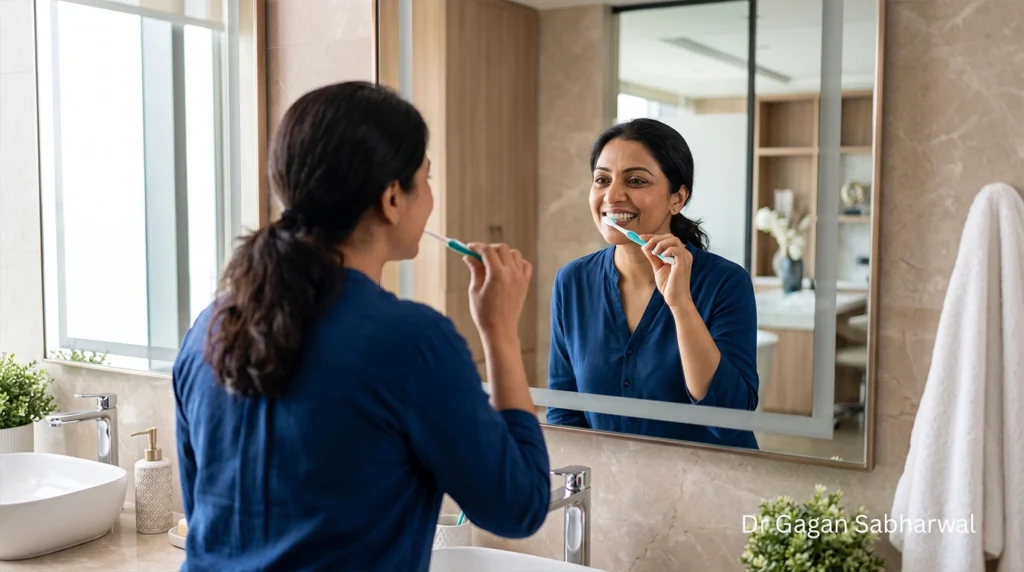
Brush your teeth and implant restorations twice daily.
Pay particular attention to the area where the implant crown meets the gum.
A soft toothbrush can clean effectively without unnecessary pressure.
Electric toothbrushes can also be useful.
Research suggests powered toothbrushes can effectively decrease plaque and inflammation around implants.
The important factor is using your toothbrush correctly and consistently.
2. Clean Between Your Teeth
Your toothbrush cannot reach every surface.
Food and plaque can collect between an implant and neighbouring teeth.
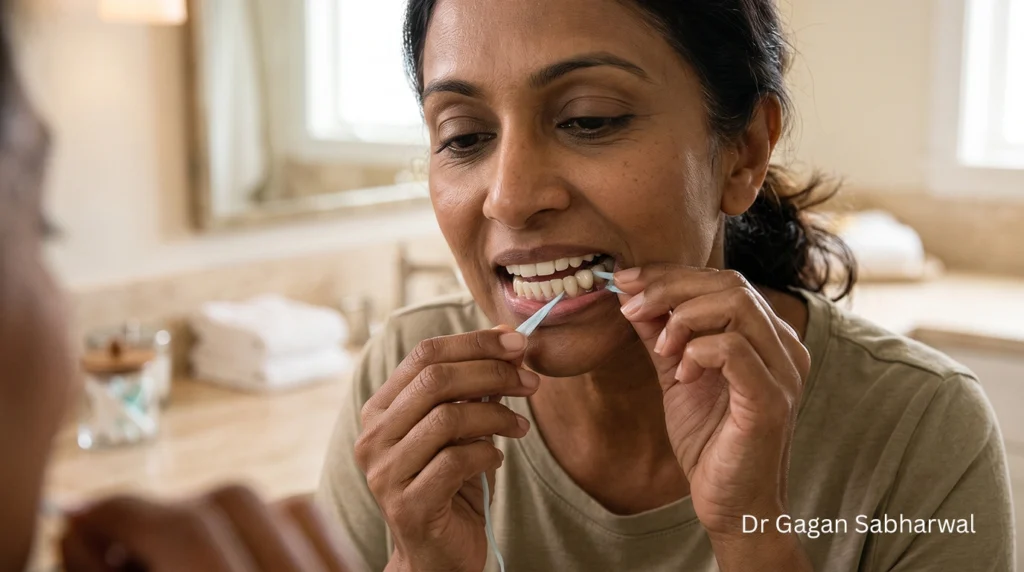
Depending on your restoration, useful cleaning tools can comprise:
- Interdental brushes
- Dental floss
- Implant-specific floss
- Oral irrigators
Recent research suggests interdental brushes and oral irrigators can be particularly useful for controlling inflammation around implants.
Ask your dental professional which option suits your implant design.
3. Do Not Ignore the Gum Line
Patients sometimes concentrate on cleaning the visible crown.
The gum line deserves equal attention.
Plaque around this area can irritate the tissues surrounding the implant.
Clean gently but thoroughly around every side of your implant restoration.
Healthy gums should remain a key goal throughout implant maintenance.
4. Employ an Oral Irrigator When Recommended
An oral irrigator uses a controlled stream of water to clean difficult areas.
Brands such as Waterpik proffer oral irrigators designed for home use.
They can be particularly helpful around bridges, multiple implants, and areas that are difficult to floss.
However, an oral irrigator does not automatically replace brushing.
Think of it as an additional cleaning tool.
5. Be Careful With Very Hard Objects
Implants are strong, but the restoration attached to them is not indestructible.
Avoid using your teeth to:
- Open packaging
- Crack hard shells
- Bite pens
- Chew ice
- Open bottle caps
These habits can impair natural teeth as well as implant crowns.
Protect your restoration by using your teeth for eating, not as tools.
6. Pay Attention to Teeth Grinding
Do you regularly wake with jaw tightness or notice yourself clenching during stressful situations?
Grinding can place additional forces on implant restorations.
Your dental professional can evaluate your bite and look for signs of excessive wear.
Some patients benefit from a protective night guard.
Do not buy one randomly without advice.
The fit needs to suit your teeth, implants, and bite.
7. Avoid Smoking
Smoking can negatively affect oral tissues and implant health.
It also increases the peril of complications around dental implants.
If you smoke, discuss this openly with your dental professional.
Reducing or stopping smoking supports both implant health and general health.
8. Keep Health Conditions Well Managed
Your mouth and general health are connected.
Conditions such as poorly controlled diabetes can affect healing and oral health.
Tell your dental team about:
- Medical conditions
- New diagnoses
- Current medications
- Changes in your health
This information helps your clinician plan appropriate long-term implant care.
9. Check Your Implants Every Day
You see your mouth more often than your dentist does.
Take a few seconds while brushing to notice changes.
Pursue:
- Redness
- Swelling
- Bleeding
- Gum tenderness
- Food repeatedly collecting around an implant
- Changes in the restoration
Do not wait for severe pain before requesting an assessment.
A Simple Morning-to-Night Implant Routine
Good Dental Implant Maintenance becomes easier when it fits naturally into your day.
Morning
- Brush for approximately two minutes.
- Clean carefully around implant margins.
- Check your gums for unusual changes.
During the Day
Drink water regularly.
Avoid repeatedly biting extremely hard foods or objects with implant restorations.
Evening
- Brush thoroughly again.
- Clean between implants and neighbouring teeth.
- Use an interdental brush or oral irrigator if recommended.
- Check for bleeding, swelling, or discomfort.
Consistency matters more than making the routine complex.
What About Full-Arch Dental Implants?
Full-arch restorations require slightly different care.
Food and plaque can gather underneath the fixed restoration.
Your clinician may recommend:
- Special floss
- Interdental brushes
- Oral irrigators
- Specific cleaning techniques
Professional maintenance becomes particularly important with these larger restorations.
Never presume fixed full-mouth teeth require no cleaning underneath.
Why Professional Implant Maintenance Matters
Home care is essential, but it does not replace professional assessment.
Your dental team can scrutinize areas you cannot properly assess yourself.
Professional implant reviews can include:
- Gum assessment
- Plaque evaluation
- Implant stability checks
- Bite assessment
- Restoration checks
- Professional cleaning
- Imaging when clinically required
Your ideal appointment frequency depends on your individual risk.
Patients with previous gum disease or other risk factors may require closer monitoring.
What Does Dental Implant Success Rate UAE Really Mean?
Patients often search for a Dental Implant Success Rate UAE before opting treatment.
There is no single percentage that predicts every UAE patient’s result.
International research on contemporary implants reports approximately 96% survival at ten years.
That figure is encouraging, but survival and perfect health are not identical.
An implant can remain in place while experiencing complications that require professional care.
Your personal outcome depends on several factors, including:
- Oral hygiene
- Gum health
- Bone condition
- Smoking
- General health
- Implant positioning
- Bite forces
- Professional maintenance
Good daily habits help put more of these factors in your favour.
Interesting Fact: Implants Cannot Get Cavities
Here is one variance between implants and natural teeth.
A titanium dental implant cannot develop tooth decay.
That does not make it maintenance-free.
The tissues surrounding the implant remain biological.
They still react to plaque and inflammation.
So, while you cannot get a cavity in your implant, you can develop problems around it.
That distinction explains why daily cleaning remains essential.
A Simple Patient Example
Envision two patients receive similar dental implants.
Patient A brushes carefully, cleans between the implants, and attends recommended professional reviews.
Patient B brushes quickly but rarely cleans around the implant margins.
Both implants may initially look perfectly healthy.
Over time, their surrounding gum health can become very different.
The lesson is simple.
Successful implant surgery gives you the foundation. Consistent maintenance helps protect it.
Warning Signs You Should Never Ignore
Contact your dental professional if you detect:
- Regular bleeding around an implant
- Persistent swelling
- Red or tender gums
- Pus or unusual discharge
- Increasing discomfort
- Pain when chewing
- A loose crown
- Implant movement
- Changes in your bite
A loose crown does not automatically mean the implant itself is failing.
However, it still needs professional assessment.
Why Follow-Up With Dr. Gagan Sabharwal Matters
Long-Term Dental Implants depend on both successful treatment and appropriate ongoing care.
Dr. Gagan Sabharwal is a Specialist Oral and Maxillofacial Surgeon with more than 20 years of experience.
His international training comprises of a Fellowship in Oral Implantology from Italy.
His practice in Dubai includes dental implant treatment for supporting crowns, bridges, and dentures.
Patients with implants can benefit from professional assessment when they notice discomfort, changes around the gums, or concerns with their restoration.
Early attention helps identify whether the problem involves the crown, surrounding tissues, bite, or implant itself.
Conclusion
Dental implants can provide excellent long-term tooth replacement, but they still need daily attention.
Effective and functional Dental Implant Maintenance starts with simple habits.
Brush twice daily, clean between implants, protect your gums, avoid damaging habits, and watch for unusual changes.
Professional maintenance remains equally important.
Research shows high long-term implant survival, but your individual result depends partly on how well you protect your oral health.
If you have Dental Implants UAE, do not wait until something hurts before checking their condition.
A few minutes of care each day can help protect your implant investment for years to come.

