
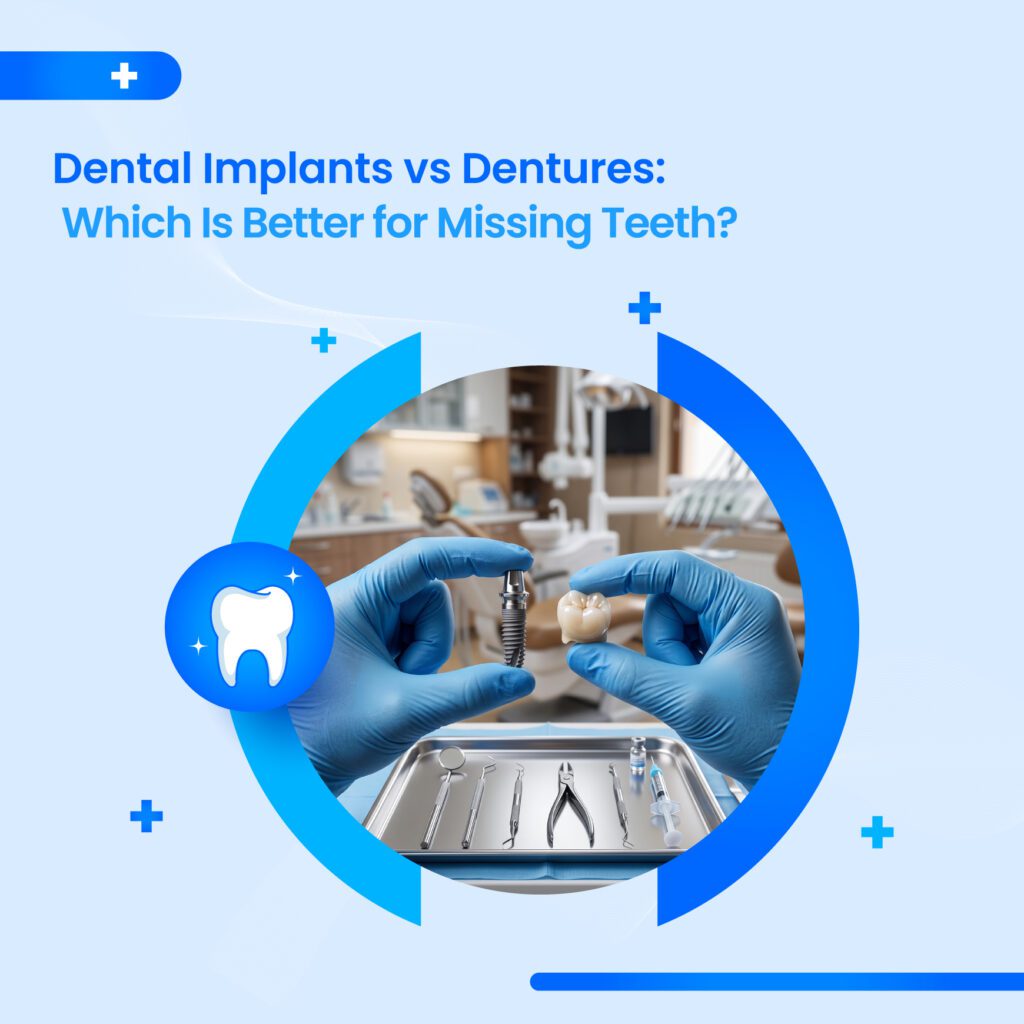
Losing teeth changes more than your smile. It can affect how comfortably you eat, speak, laugh, and interact with other people.
Fortunately, modern dentistry offers several ways to replace missing teeth.
Two of the most common Tooth Replacement Options are dental implants and dentures. But which one makes more sense for you?
The answer is not as simple as saying one treatment is always better.
Dental implants provide fixed or implant-supported tooth replacement. Traditional dentures provide a removable solution that usually requires no implant surgery.
For patients comparing Dental Implants vs Dentures Dubai, factors such as comfort, stability, bone condition, maintenance, treatment time, and budget all matter.
Modern Dental Implants UAE also provide several possibilities. Implants can replace individual teeth or support bridges and dentures.
Meanwhile, modern Dentures Dubai can provide an effective solution for patients who prefer removable treatment.
This guide explains:
- How implants and dentures work
- Their main advantages and limitations
- How they compare for eating and comfort
- Which patients may prefer each option
- How to choose confidently
The best treatment is ultimately the one that suits your mouth, health, lifestyle, and expectations.
What Are Dental Implants?
Dental implants are small posts surgically positioned within the jawbone.
They act as artificial tooth roots.
Implants can support:
- A single crown
- Multiple-tooth bridges
- Implant-supported dentures
- Full-arch restorations
Their strong connection with the jaw provides excellent stability.
What Are Dentures?
Dentures are removable appliances that replace missing teeth.
They can replace several teeth or an entire dental arch.
Traditional dentures rest over the gums rather than being fixed directly into the jawbone.
They remain a widely used tooth replacement option.
Dental Implants vs Dentures Dubai: Key Differences
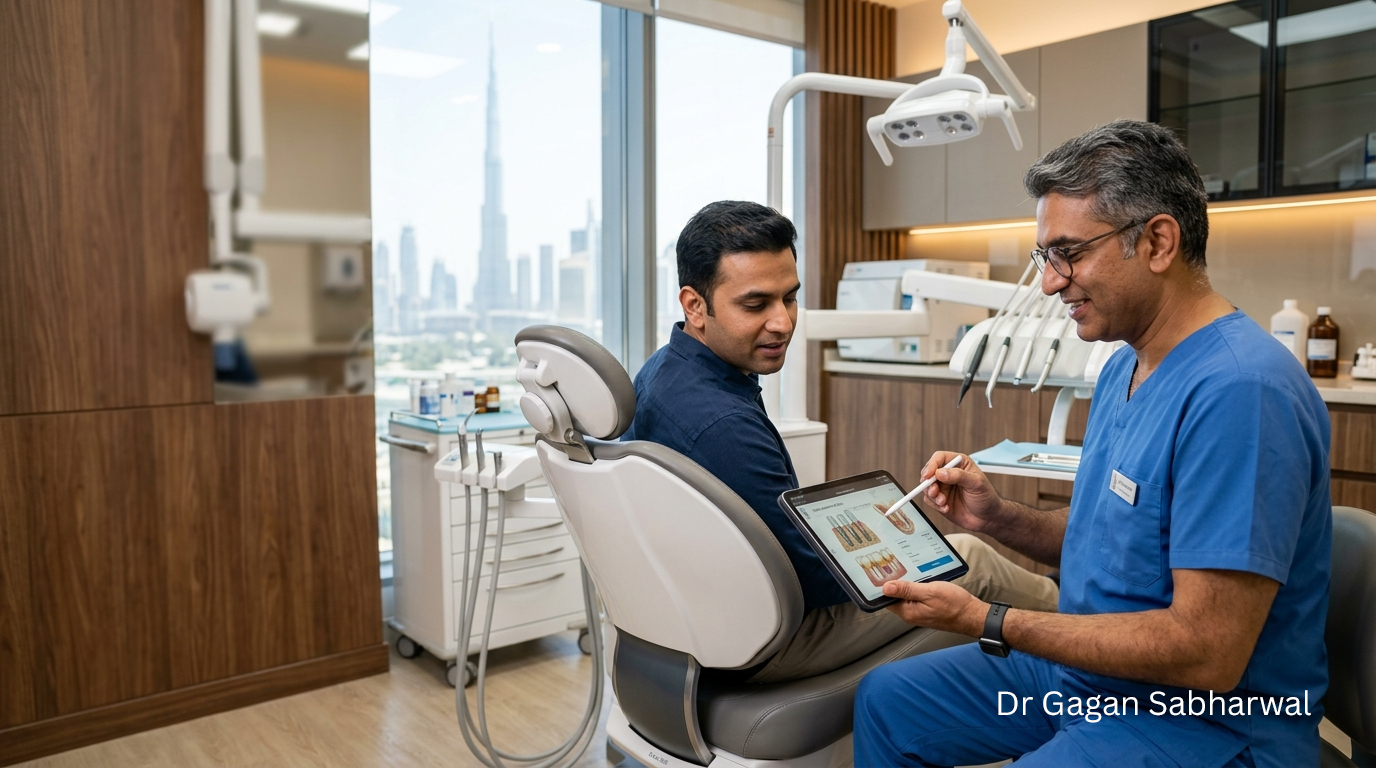
Both treatments replace missing teeth, but they work differently.
Stability
Dental implants anchor replacement teeth to the jaw.
Traditional dentures rely on their fit over the gums.
Implant-supported teeth therefore generally provide greater stability.
Removability
Many implant restorations remain fixed in the mouth.
Traditional dentures are removable.
Some patients prefer fixed teeth, while others appreciate a removable option.
Treatment Time
Dentures can often be completed without a surgical healing period.
Dental implants require surgery and biological healing.
Maintenance
Both options require regular cleaning.
Dentures need cleaning outside the mouth.
Implants require careful brushing and professional maintenance around the implant and gums.
7 Benefits of Dental Implants
1. Strong Stability
Implants create a secure foundation for replacement teeth.
This can make eating feel more natural.
2. Natural Appearance
Well-planned implant restorations can closely resemble natural teeth.
3. Improved Chewing
Greater stability helps patients chew a wider variety of foods comfortably.
4. No Denture Adhesive
Fixed implant restorations do not depend on denture adhesive.
5. Jawbone Stimulation
Implants transfer chewing forces into the jawbone.
This differs from conventional removable dentures, which rest on the gums.
6. Multiple Treatment Possibilities
Implants can replace one tooth, several teeth, or an entire arch.
7. Long-Term Treatment Option
With good oral hygiene and professional maintenance, implants can provide long-term tooth replacement.
What Are the Benefits of Dentures?
Implants are not the right choice for everyone.
Modern Dentures Dubai offer important advantages.
No Implant Surgery
Traditional dentures do not require implants to be surgically placed.
Lower Initial Investment
Conventional dentures usually have a lower upfront cost than extensive implant treatment.
Suitable for Extensive Tooth Loss
One appliance can replace many missing teeth.
Faster Initial Treatment
Dentures can sometimes restore appearance sooner than staged implant treatment.
What Are the Limitations of Dentures?
Traditional dentures can require an adjustment period.
Some patients experience:
- Movement while eating
- Reduced chewing confidence
- Gum irritation
- Changes in fit
- Difficulty with certain foods
The jaw and gums can also change over time.
This means dentures may require adjustment, relining, or replacement.
What Are the Limitations of Dental Implants?
Dental implants also involve important considerations.
They require surgery.
Treatment can involve several months of healing.
Some patients also require:
- Bone grafting
- Tooth extraction
- Sinus augmentation
- Gum treatment
Implants usually involve a greater initial financial investment.
They also require sufficient oral health and appropriate treatment planning.
What About Implant-Supported Dentures?
The choice is not always simply implants or dentures.
You can combine both.
Implant-supported dentures use dental implants to stabilize a denture.
This can provide:
- Better retention
- Greater chewing confidence
- Less movement
- Improved comfort
For some patients, this offers a useful middle ground between conventional dentures and fixed implant restorations.
Which Option Feels More Like Natural Teeth?
Many patients prioritise stability.
Fixed implant-supported restorations usually feel more secure because they do not move like conventional removable dentures.
However, individual experiences differ.
Some patients adapt extremely well to properly fitted dentures.
Your expectations matter when selecting treatment.
Which Option Is Better for Eating?
Stable teeth generally make chewing easier.
Implant-supported restorations can provide greater stability when biting and chewing.
Traditional dentures may require more care with hard or sticky foods.
However, well-designed dentures still restore useful chewing function.
Which Option Is Easier to Clean?
This depends on the restoration.
Traditional dentures are removed for cleaning.
Single implants are cleaned similarly to natural teeth, with additional attention around the gum line.
Full-arch implant restorations can require specialised cleaning underneath the bridge.
Neither option is maintenance-free.
Who Makes a Good Candidate for Dental Implants?
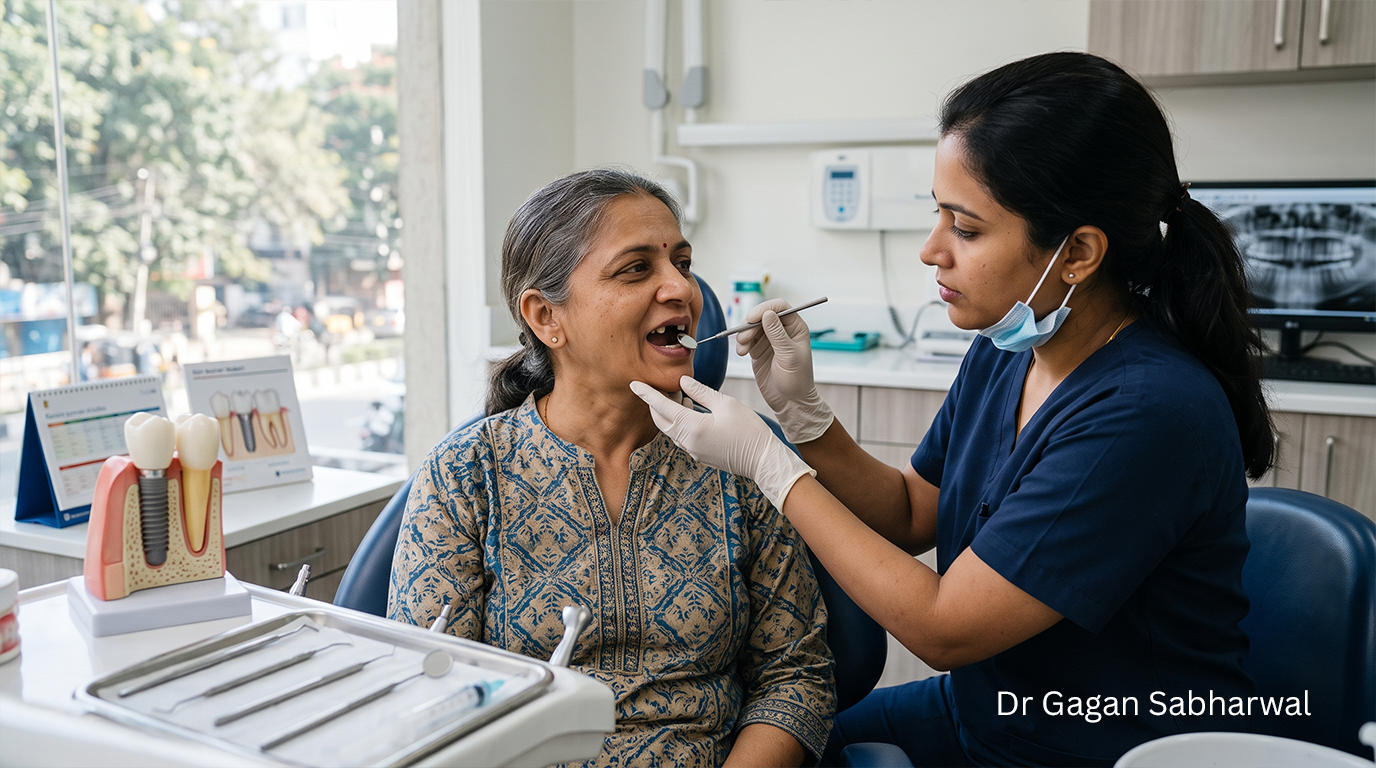
You may be suitable for Dental Implants UAE when you have:
- Healthy gums
- Suitable jawbone
- Good oral hygiene
- Realistic expectations
- Suitable general health
Bone loss does not automatically rule out implants.
Bone grafting may make implant treatment possible in selected cases.
Who May Prefer Dentures?
Dentures may suit patients who:
- Prefer non-implant treatment
- Want lower initial costs
- Have extensive tooth loss
- Cannot undergo implant surgery
- Prefer a removable restoration
Clinical assessment helps determine whether dentures meet your functional needs.
A Simple Patient Example
Consider two patients who lose all their lower teeth.
The first patient wants a lower-cost solution without implant surgery.
A conventional denture may meet those priorities.
The second patient struggles with denture movement and wants greater stability.
Implant-supported treatment may provide a better solution.
Neither patient makes the “wrong” choice.
Their priorities simply differ.
How Do You Choose the Right Tooth Replacement Option?
Start by asking yourself several questions.
- Do I want fixed or removable teeth?
- How important is chewing stability?
- Am I comfortable undergoing surgery?
- Is my jawbone suitable for implants?
- What treatment time suits me?
- What is my budget?
- What maintenance am I comfortable with?
Your clinical examination then helps narrow the options.
Why Consult Dr. Gagan Sabharwal?
Dr. Gagan Sabharwal is an oral and maxillofacial surgeon with advanced training in oral implantology.
His practice provides dental implant treatment for missing teeth, including solutions supporting crowns, bridges, and dentures.
Specialist assessment is particularly useful when treatment involves significant bone loss or more complex surgical requirements.
The goal is not simply to recommend implants over dentures.
It is to determine which treatment provides the right balance of function, comfort, aesthetics, and long-term care for you.
Conclusion
There is no universal winner when comparing Dental Implants vs Dentures Dubai.
Implants offer excellent stability and can feel closer to natural teeth. Dentures provide a removable, non-implant alternative with lower initial costs.
Some patients even benefit from combining both through implant-supported dentures.
Your bone condition, oral health, lifestyle, budget, and personal preferences ultimately determine the best approach.
If you are comparing Dental Implants UAE, Dentures Dubai, or other Tooth Replacement Options, begin with a professional assessment.
Book a consultation with Dr. Gagan Sabharwal to explore the most appropriate solution for restoring your smile, comfort, and chewing function.

